
Victor van Hees
Victor is a avid lover of gourmand and joie-de-vivre. Having travelled across Asia, he fell in love with the vast diversity of Asian food, and has made it his lifelong goal to disseminate this love to as many communities as possible.
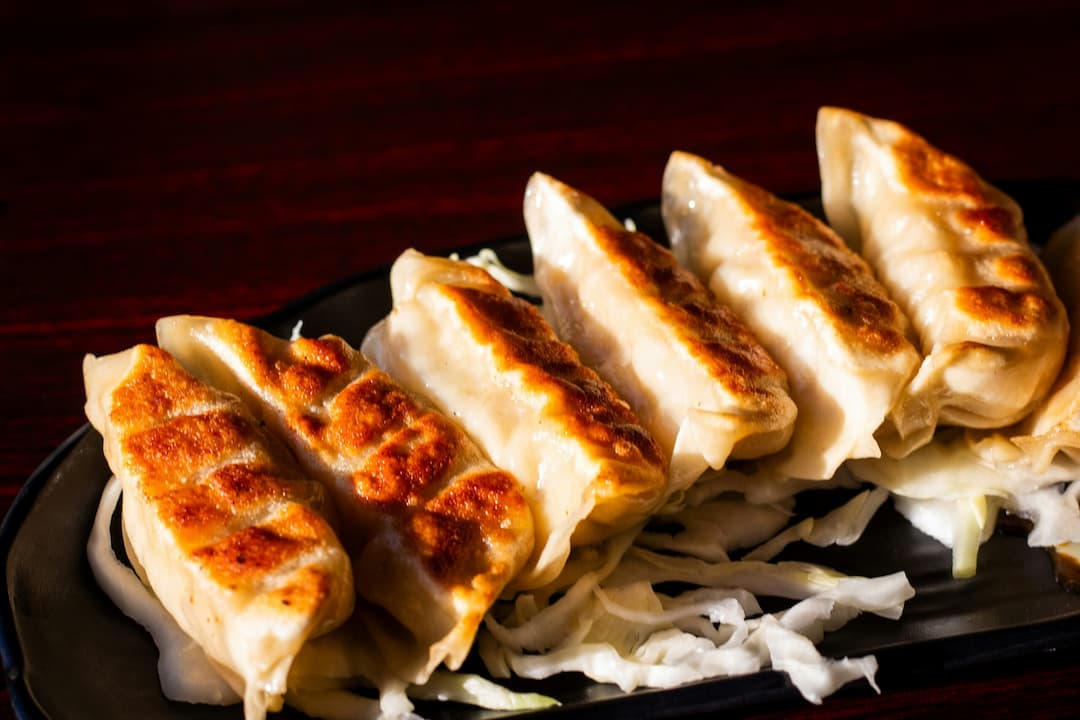
Japan is a vast and culturally rich country with plenty of delicious cuisines and unique dishes with varying tastes. Among the country’s fan-favourites is the delicious gyoza, little dumplings made with rice powder and flavourful fillings. Though it is not technically a traditional Japanese dish, this delicacy is particularly popular in izakaya establishments, becoming the go-to dish for many working-class Japanese. This article will explore the story behind the success and spread of gyoza.
It is a little-known fact that gyozas are not a Japanese dish. In actuality, it is quite a recent addition to the country. The actual place of origin for gyoza is China, where it was called jiaozi (Gyoza itself is the Japanese pronunciation of jiaozi). After the Second World War, Japanese veterans would bring the dish to Japan on their journey back home, where interest in the new delicacy quickly took root. During this period, gyoza would often be sold as a side dish at ramen stalls.

Though gyoza started out as a Chinese dish, local Japanese chefs have made subtle changes over time to cater to Japanese tastes. The first noticeable change is the rich taste of garlic, which becomes more pronounced in Japanese gyoza. At that period of time, Japanese people did not have a rich meat-based diet, and there was a lack of raw materials in post-Japan. Thus, the rich and zingy taste of garlic worked well as a substitute for many ingredients.

Another fundamental difference lies in the wrappers for each gyoza. Chinese jiaozi would often have substantially thicker wrappers, while its Japanese counterparts have thinner ones. The difference in wrappers’ thickness comes from the production methods: While Chinese chefs would prefer to make their wrappers by hand, most Japanese restaurants would prefer to use the machine-made wrappers, resulting in thinner and more consistent wrappers.
In Japan, gyoza is mostly accompanied by the tare dipping sauce mixed with garlic, chili oil, and rice vinegar. The extra seasoning deepens the flavour of the gyoza, creating an unforgettable yet rustic experience.
Japanese gyoza is a favourite side dish for most Japanese, especially at most drinking parties. Internationally, it is quite a popular snack to be enjoyed alongside the main course and the drinks. There are plenty of great qualities within a gyoza that make it one of the best Asian snacks you could find.

Gyozas tend to have thinner wrappers compared to other types of dumplings. Thus, when pan-seared, it leaves a layer of crispy skin at the bottom of the gyoza, a special feature that most Chinese jiaozi lack. Even after they are steamed, the crispy skin will still retain its texture, ensuring the best culinary experience for any diner.
Unlike Chinese jiaozi, gyozas substitute some meat ingredients with plenty of garlic, creating a pungent taste aftertaste that lingers for a long time. Gyozas lacking this distinctive taste will not be as appealing.
In both China and Japan, gyozas are rarely eaten without sauce, and it can even be a deciding factor that determines the quality of the gyoza. In Japan, patrons would eat gyoza with the local tare sauce, which boasts a deep and umami flavour profile. In China, the sauce of choice is soy sauce with chili oil instead, which imparts a stronger and more intense flavour.
Gyozas are the perfect bite-sized snacks for any party: They are small, tasty, and quite easy to prepare. However, because this is a specialty dish in Japan, it can be hard to reliably source high-quality gyozas for catering events or parties. OrienBites offers the perfect solution for you! Our range of frozen gyoza ensures that you will always find the perfect gyoza for your menu, whether you need vegan or non-vegan variants. Our gyozas are made by artisans with passion and love for traditional Asian food, using the latest technologies to preserve the freshness of the ingredients. Need more information about our range of products? Contact us right away for more details!
Distinctive enough from its cousins in China, the Japanese gyoza is a great starter for foodies who have just recently started to explore the full intricacies of Japanese cuisine. For Horeca professionals, gyozas are the perfect finger snacks that could greatly benefit businesses without requiring plenty of investments.

Belgium Address
food-expert@food-expert.com
Vietnam
Germany